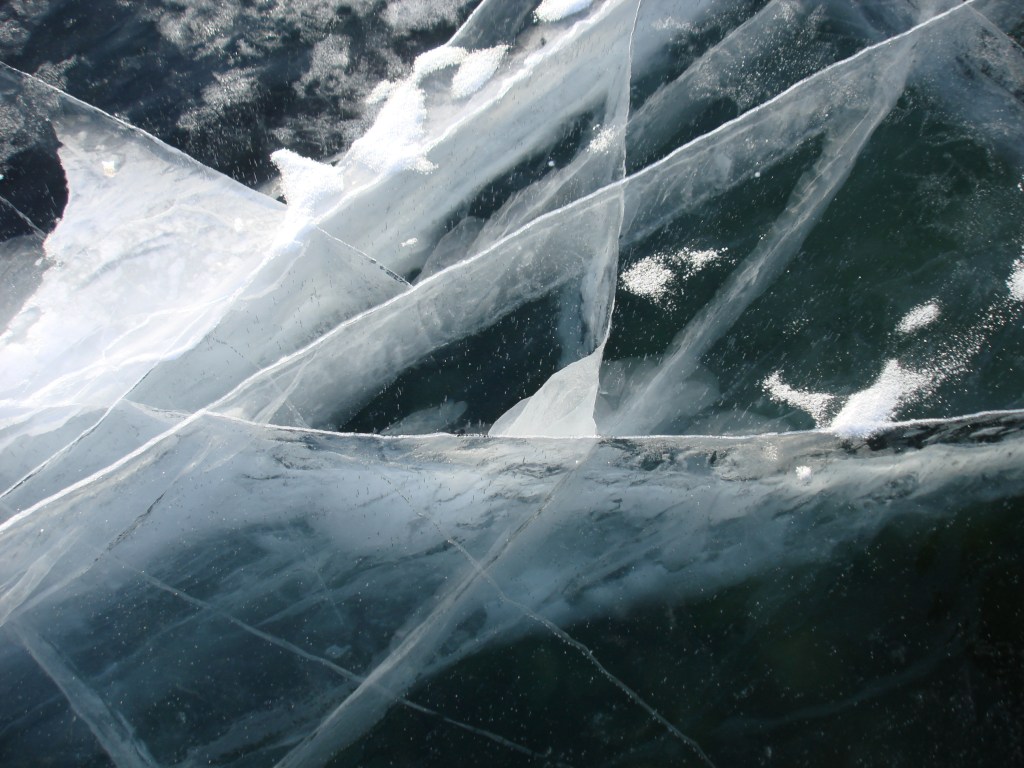
On Sakhalin Island, in the middle of the Siberian winter
Good Time Samaritans
Getting through the winter was slightly easier for me than for the rest of the family since I had work to occupy my days. I made a second visit to Sakhalin, to attend a board meeting there, and meet the new manager RusEnergo had just appointed in an equivalent position to mine. My key objectives were to form a good relationship with him and to see when his company would be ready to start negotiations around the ideas I had developed in December. His name was Mikhail Sorokin, he had just been recruited from a different Russian company, and he was very young – probably in his mid-twenties. He was tall and fair-haired, with the large lips and prominent cheek-bones typical of Slavs.
After the meeting, Eastern Energy organised dinner and drinks in a bar outside of the main town. A bus was arranged to take us there and back to our hotel at the end of the evening. I made sure to sit next to Mikhail, who turned out to be a party-animal and big fan of night clubs. He described to me with passion the many venues he knew in Moscow but was strangely reluctant to discuss business and a plan for starting negotiations. It is said that Russians will only trust someone after they have seen them drunk, so perhaps that explained his reticence, or maybe he simply did not have any orders from Turbinov yet. Our dinner was accompanied by many drinks and toasts – a tradition in Russian business meetings – and soon everyone was quite drunk. Mikhail pointed to a couple of girls sitting at the bar.
“Do you think they are prostitutes, or local women looking for a husband? Sometimes there is not much difference.”
“I don’t know, I don’t have any experience in that area.”
“Neither do I” he said hastily, “but sometimes I wonder whether prostitutes would not be better than girlfriends. Let’s say a prostitute costs 10,000 roubles a night. If you have a girlfriend, you need to bring a present every time you meet – that’s at least 20,000 roubles. And then you have all the challenges of mood management and jealousy. Let’s go see who these girls are.”
The girls turned out to be friendly, attractive and intelligent prostitutes, who asked if they could come to our hotel room. We declined and joined the big group of increasingly drunken RusEnergo, Globoil and Eastern Energy employees, some of whom had now moved to the dancefloor.
It was getting late, but with jet lag it felt like it was early evening to the visitors from Moscow, and the party continued. At around 3am, I headed off to the toilets. The large volumes of beer and vodka I had consumed meant that I stayed longer than usual, and when I returned, the bar was almost empty. The entire party had returned to the city in the bus, leaving me alone with the two prostitutes and the barman. The latter told me bluntly that it was closing time.
I had a big problem. The bar must have been about 5km from my hotel, and the bus had left with my coat. There was no mobile phone reception to call my colleagues. On my feet, I wore a pair of normal office shoes, totally unsuited to walking in snow. It would take at least an hour to walk back, and the temperature was -30°C outside; clad in only a shirt and a suit, it would be quite possible to literally freeze to death in that time. The two girls saw my predicament and offered to give me a lift back in their car. At the hotel, they proposed their services for free, but instead I offered them more vodka from the hotel mini bar and red caviar, which I had bought in the market earlier that day. They had a ravenous appetite and finished off a whole 500g pot, so I added some arctic crab to our late-night feast, whilst they produced another flask of vodka. Despite the language barrier and my inebriation, we managed to have a pleasant, if basic, chat about life on Sakhalin. It sounded tough. Most people lived in tiny, Khrushchev-era flats from the 1950s. There were few job options for women. Most packed fish in a local factory – hard, boring and smelly work. Lucky ones could get a job with the joint ventures set up with Western companies to produce oil and gas – jobs that offered good pay and the possibility of meeting a foreign man, who might take them away to a better life somewhere else. My new friends finally left at around 5am. I grabbed a few hours’ sleep, before reporting for the noon flight back to Moscow, which was always a highlight of visiting Sakhalin. It was an opportunity to sleep off the hangover of the night before, whilst sitting in a comfortable business class seat. And the flight followed the path of the sun as it headed west, giving me nine hours of exposure to its life-affirming light – something especially welcome during the dark Moscow winter.
Soacer taxt
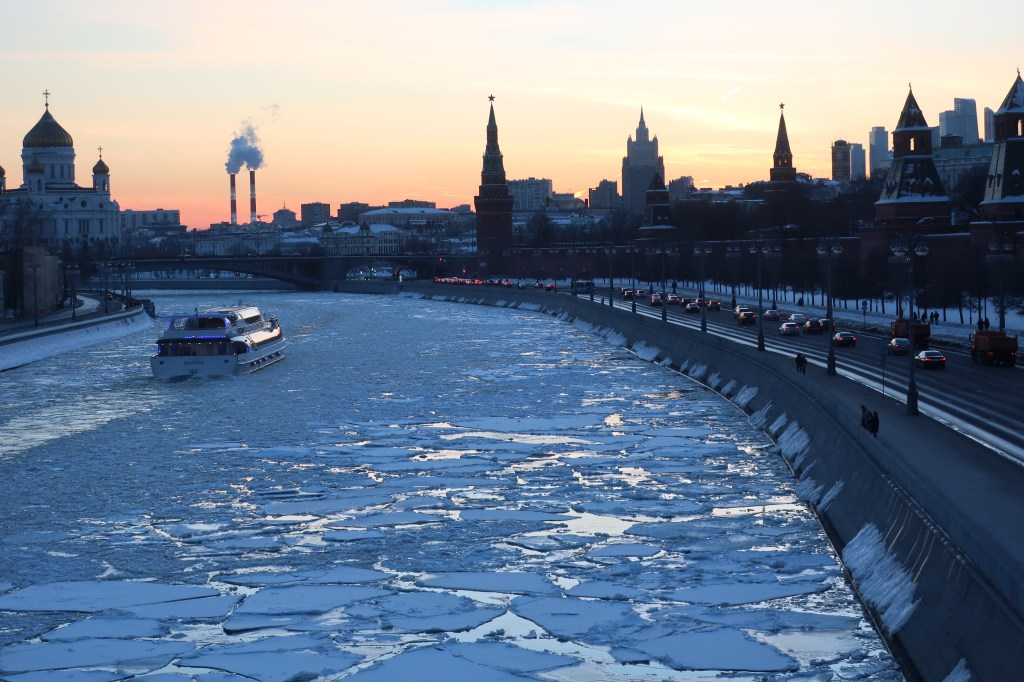
Moscow, 19th January
Baptism Under Ice
My return from the long New Year holiday was marked by a uniquely Russian experience. Traditionally, some Globoil staff would go to a nearby bar after work on Fridays and one night we stayed particularly late and drank more than usual. Olga, the only lady present, announced her intention to be baptised under the ice of the Moscow River the following Sunday. In Russian Orthodox belief, Jesus was baptised on January 19th, and Russians still follow a tradition of copying him – despite, or because of, the winter weather. Perhaps trying to impress an attractive woman, several of the men present said they would join her. The evening broke up and I headed off home, forgetting all about the silly idea. Two days later I got an early morning phone call from Olga asking if I was ready. “Ready for what?” I asked. Then I remembered that perhaps I too had promised to be baptised. I did not have the courage to refuse, and joined her in bright sunshine, thick snow, and a -20°C temperature in a park in the north of Moscow. I was the only one to keep their word, the others having been strangely uncontactable that morning.
We walked through the park, crossing people coming from the river. Some wore strange, blissful smiles; some simply looked cold; one young boy, led by his father, was crying loudly. Olga took me to a clearing by the frozen river where there was a small hut to get undressed, and a queue of people waiting in their swimming costumes beside a large, neatly cut rectangular hole in the ice.
The event was well organised. Steps led down into the water and a wooden cage had been installed underwater to prevent people drifting away under the ice. A frogman and medical team were on standby in case of problems. I undressed and took my place in a queue of people waiting their turn to immerse themselves. Standing in -20°C air whilst wearing only a bathing suit was surprisingly bearable. Many people had told me that the baptism itself was easy because the temperature of the water, as per the laws of physics, would be above freezing and so be much warmer than the air. I watched people cautiously approach the hole, wade in, and then duck their head under the water the traditional three times. From their reactions, it was clearly an ordeal – the optimists who said it would be easy had forgotten that the cooling capacity of water was many times greater than that of air. Finally, it was my turn. Wading in was OK. Ducking my head under the first time was also bearable – the shock drowned out any other feeling. Immersing myself the second time was painful, since my brain had now registered what was happening. The third time was excruciating. I clambered out in a hurry, to find that leaving the water was even worse, as the even colder air started to freeze my wet skin. Some people in the queue shouted “Tapochka!” to me, but I didn’t understand. They pointed to the hole, and I saw one of my flip-flops floating in the water. I was in no mood to wade back in to retrieve it, and instead rushed back to the hut to dry and get warm. Fully clothed, I experienced a totally different sensation – one of warmth, as if deep inside me there was an electric heater. My muscles and body were wonderfully relaxed. These pleasant physical sensations were accompanied by a deep feeling of peace that stayed with me all through the rest of the day.
Belomorsk, Russian Far North, Summer 2017
Russian Provincial Life – in the Train Station
Our trip back from the Solovki involved taking a different ferry to a small town called Belomorsk and then a train up to Murmansk, on the Barents Sea, from where we could fly back to Moscow. The one hour wait for our train at Belomorsk station introduced us to Russian provincial life. In the waiting room there were three railway maintenance employees, a ticket seller and three drunks. One of the latter began banging on the ticket office window, demanding to buy a ticket for which he had no money. The salesman ignored him, and he banged harder and harder until he broke the window, at which point the police were called. The policemen greeted him with a friendly “Hello Sergey! Not again!?” and led him away. After that, one of the two remaining drunks started talking to us in Russian. He was tall and well-built, was accompanied by a large Alsatian dog and carried a large plastic bag with clothes and a bottle of vodka. We pretended not to understand, and said we spoke only French. He claimed he spoke our language and demanded we tell him a funny story. We ignored him, but he raised his voice, demanding – in Russian – «Французский анекдот! Французский анекдот!» (“French anecdote! French anecdote!”). We were saved by the third drunk, who, whilst his colleague was distracted, had quietly removed the latter’s bottle of vodka from the bag and had started to drink it. The supposed French speaker followed my gaze, looked around, grabbed his vodka bottle back and started shouting at the thief. The two men went outside, followed by the dog. Ten minutes later the well-built drunk and the dog returned. We had changed places to sit in a dark corner with the railway workers, and he did not notice us immediately. Instead, he sat down and started drinking quietly. Finally, he looked around and saw us. «Французский анекдот! Французский анекдот!» he chanted, louder and louder. The situation was beginning to become worrying when we were saved by the arrival of the train.
 Caviar, Vodka and Tears